
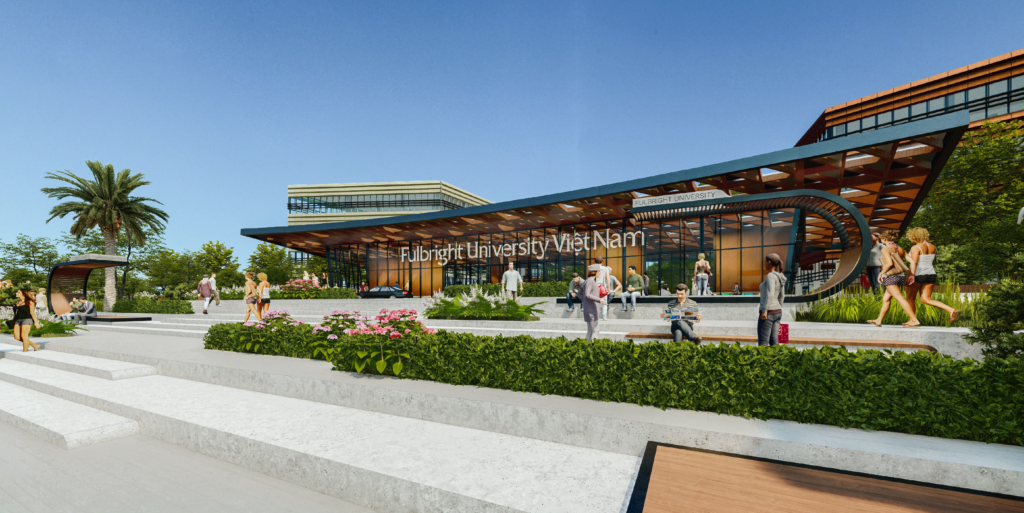
Architect Gregg Pasquarelli works for the New York-based architectural firm SHoP, which was once named “The World’s Most Innovative Architectural Firm” by Fast Company. SHoP’s notable designs include the Barclays Center in Brooklyn, the East New York Riverfront Park, the Botswana government’s Innovation Center complex, and projects for Google in Mountain View, California. SHoP also won the 2009 National Architecture Award from the Cooper Hewitt National Museum of Architecture, part of the Smithsonian Institution.
Architect Gregg Pasquarelli stated that there are many reasons why SHoP is interested in the Fulbright University construction project.
“First of all, to imagine a university starting from scratch is a fantastic opportunity and experience. Secondly, I think the Fulbright challenges us to almost rethink the concept of higher education and to blend Vietnamese and American ideas into a project – in this case, a university – which is a truly exciting opportunity. So, as architects, we are thrilled by this challenge.”
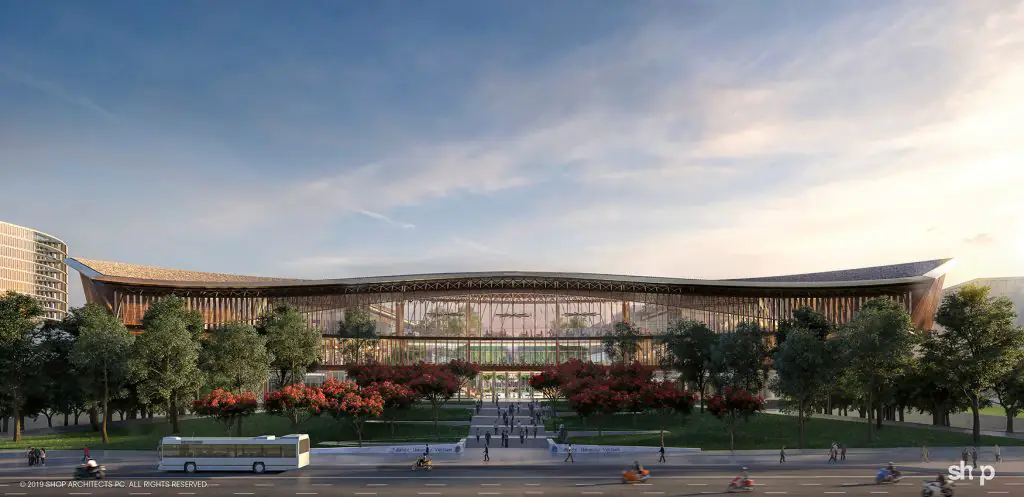
A Space for Creativity
What aspect of the Fulbright University construction project excites you the most?
What excites me about the Fulbright University project is that we’re designing a university that will serve thousands of young people, many of whom haven’t even been born yet. So, sitting here right now and thinking about what will help people see the world differently in 10, 20, 30, 40 years is incredibly inspiring. It excites me every day when I wake up and start working on the design.
Ho Chi Minh City is transforming into a smarter city. What does SHoP envision as a sustainable university campus? What does sustainability mean in his designs?
HCMC is a very interesting and vibrant metropolis. As someone born and raised in New York, when I first came here, I felt the energy of Manhattan every day. The city is diverse. Vibrant. Exciting. Growing. And it’s very young. Future-oriented.
Therefore, when thinking about designing buildings in cities around the world, try to harness the energy of those places. As a developing city – as in all coastal cities – we are facing major issues such as rising sea levels and climate change. We will have to think about what the university’s image should be and set our vision now.
Therefore, sustainability is crucial, not just in terms of the application of solar panel technology, but also in terms of how the building will feel. How will the building adapt to solar energy? How will the building regulate its airflow? How does it cope with changing sea levels?
The most sustainable thing an architect can create is to build buildings that people love, preserve them, and use high-quality materials that last a long time. You don’t want people rushing to renovate them every 20 years. That’s an environmental disaster. Building buildings that can last 50, 100, 200 years – that’s the most sustainable thing you can do.
In the press release regarding your collaboration with SHoP, you mentioned the element of “space for creativity.” We would like to know what SHoP does to support, build, and create “space for creativity.”
Creativity is a big part of SHoP’s culture. Perhaps half of the office space we work in is open space. It has no desks. No rooms. It’s a place that can constantly change. We can experiment with new technologies and test new ideas.
We get to meet and talk, work together as a team, and experience the really interesting challenges we’re facing in the world. We’re also very fortunate to work for some of the best and most advanced technology companies in the world. We’re building a lot of buildings in New York and Silicon Valley. These companies are experiencing the same thing.
Asset of Vietnam
When undertaking this project, SHoP wants to know why they are coming to Vietnam?
I want to learn to become a better Vietnamese chef, which I’m sure of, because the food here is so diverse. It’s truly amazing!
I really want to say this: Vietnam has incredible energy and a positive attitude towards the future. It’s a place I love every time I come here. I’m so happy. I feel energized and inspired. The people here are amazing. They’re smart. This is truly a forward-looking country.
We feel honored to have spent time here and to be able to design a building that we believe will be every important for the future of Vietnam. I can tell you that we have learned a great deal while here. But, of course, I want to be a better chef and cook delicious Vietnamese food.
How is it possible to hold workshops, discussions, and public meetings in Ho Chi Minh City while simultaneously carrying out construction work on projects?
We want to conduct a public outreach process. In some projects, we have 20, 30, or 40 public meetings to present the model, show the ideas, and talk about what we are trying to do. We want to hear feedback and encourage public participation.
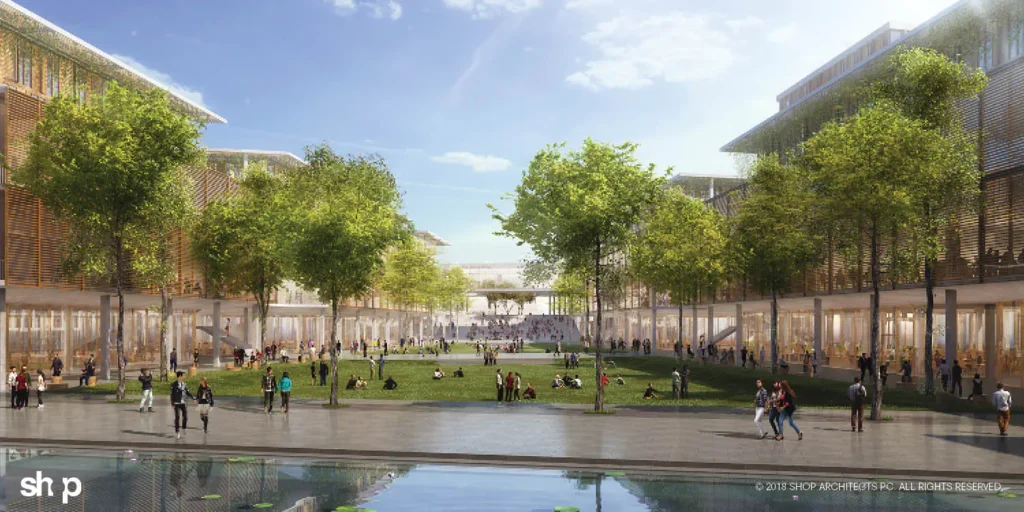
We also envisioned that when the school is built, it wouldn’t be a walled university campus accessible only to students and faculty. We viewed it as an asset to Ho Chi Minh City and to Vietnam as a whole.
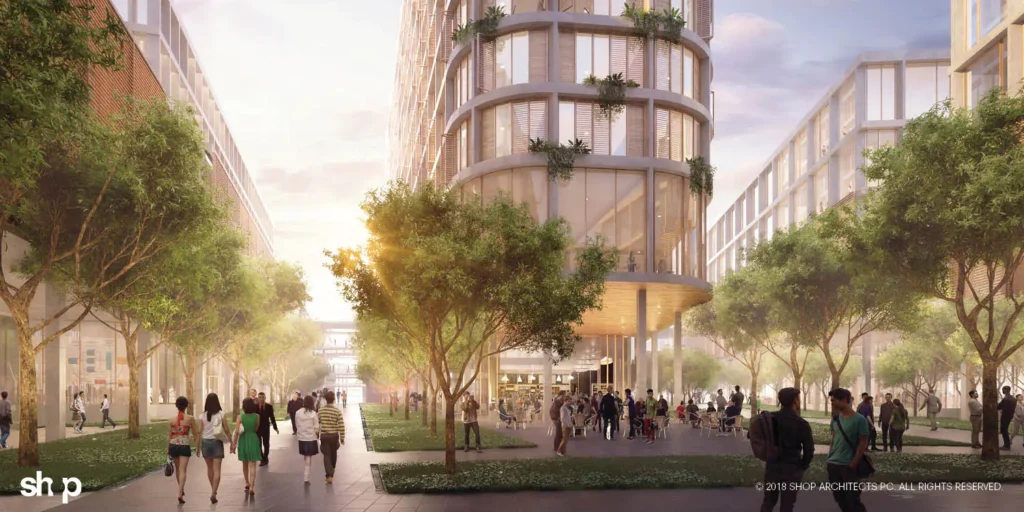
Anyone is welcome to walk around the campus, to meet students, talk to professors, to see what’s going on, and to observe the interactions. We will design the school with such a friendly space in mind.
Hello
He had visited many architectural sites in Vietnam. What impressed him the most?
I think what’s interesting about Vietnam is that the organization of traditional craft villages differs significantly between the North, Central, and South. This reveals differences over thousands of years, making it truly unique. Then, observe the influences of the French colonial period on architecture. The influence of the West on architecture. But most importantly, observe how Vietnam harmonizes these differences. I think we don’t really understand what Vietnamese architectural identity truly is because it’s a blend of thousands of years of history and what will happen in a country with many young people looking towards the future. I hope our project is a small part that can advance those visions. Vietnam is a wonderful country and a great place to experience.
And how can the public keep track of what SHoP does?
I’m very fortunate to be a founding member of SHoP and to have started this business with my partners nearly 20 years ago. We’re now working on incredibly diverse projects all over the world. Sometimes it’s difficult for me to keep up with everything I’m pursuing and creating. It’s exciting to go to work every day, travel all over the world, and be able to connect with amazing clients like Fulbright. Currently, we have 19 major projects under construction around the world. Over the next two years, many of these projects will be completed, and there will be a lot of press coverage about these buildings. You will be able to read quite a bit about them. But the best way to connect is when you’re in New York, the company tells you to stop and say “Hi.” We’re constantly changing what we’re doing.